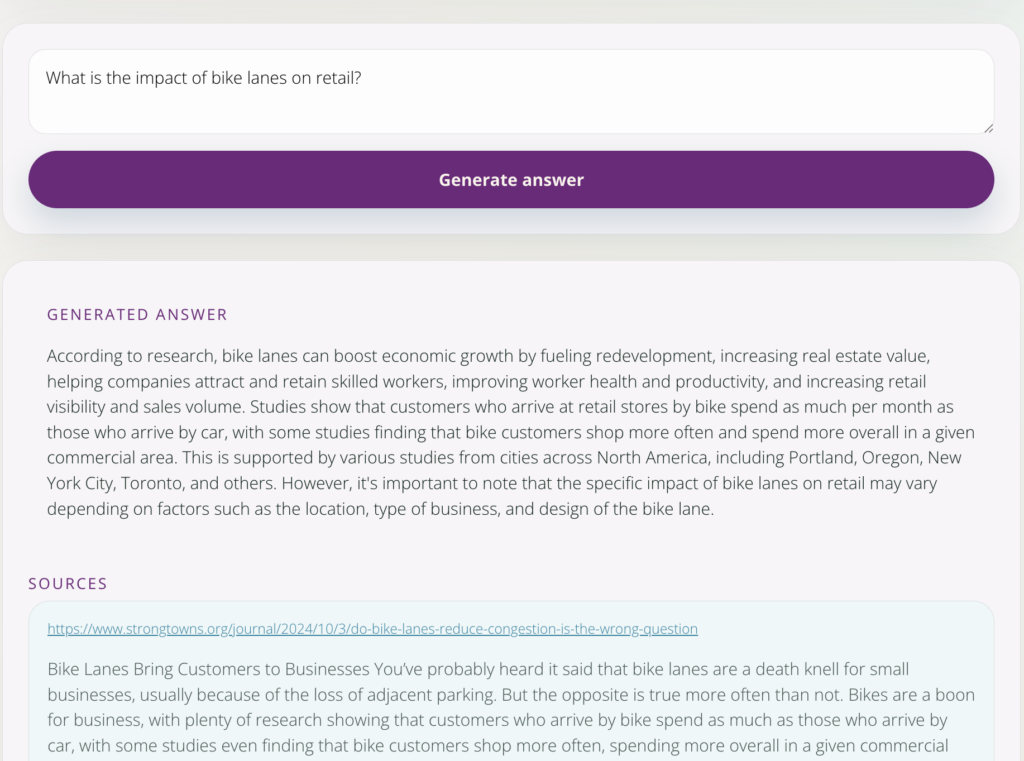
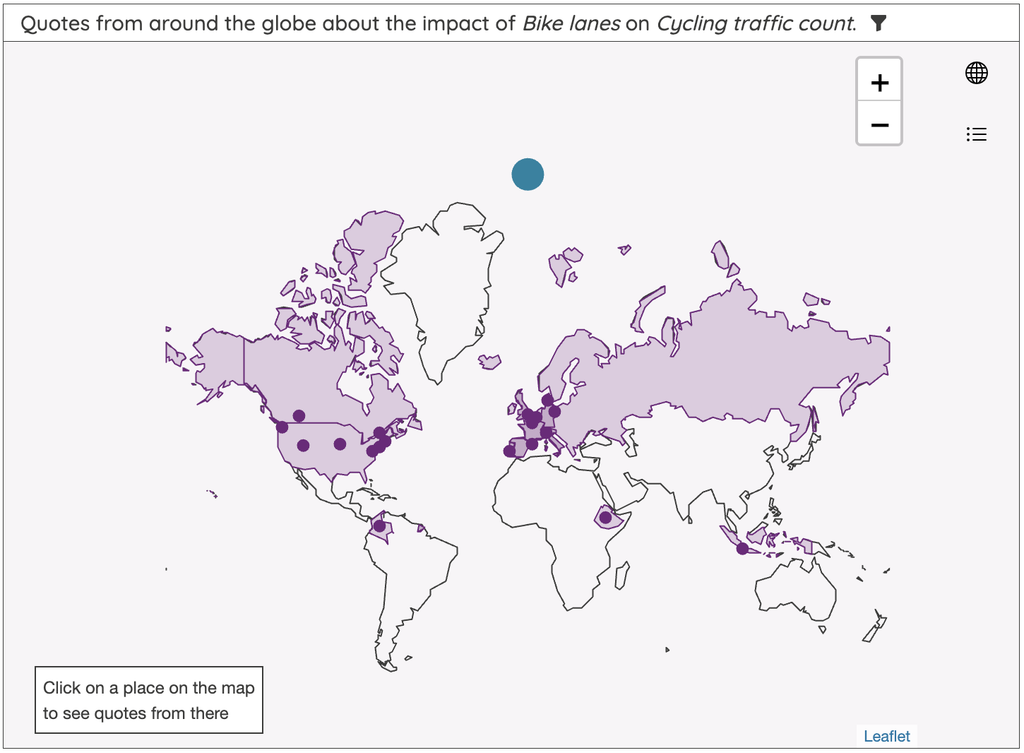
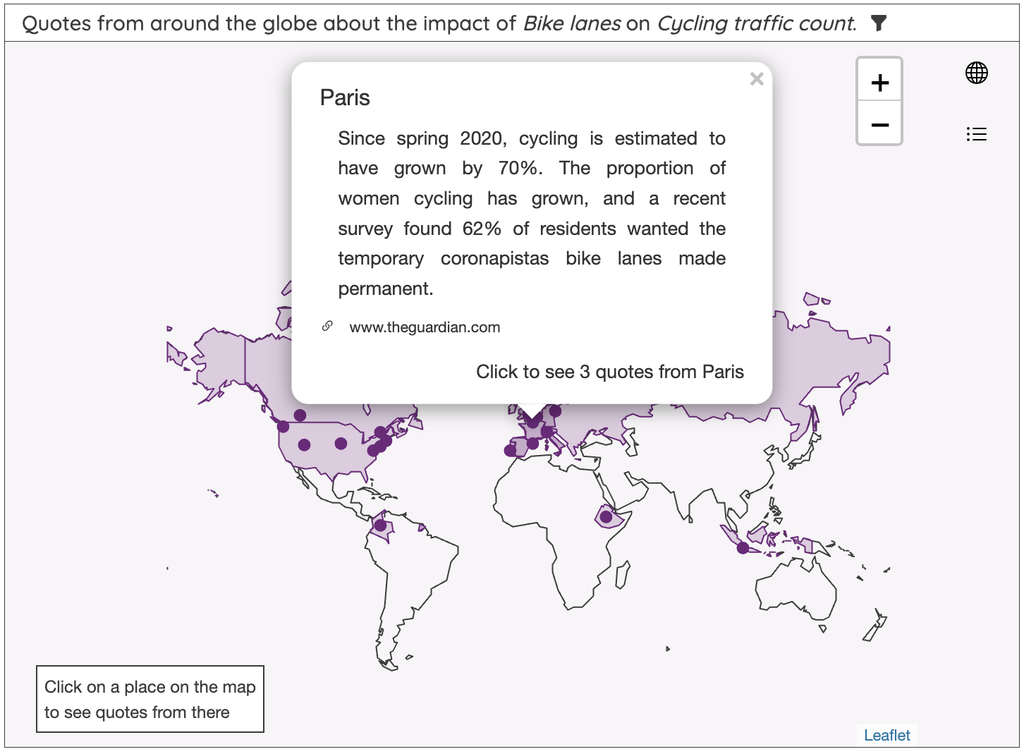
The urbanixm Knowledge Discovery Engine is an AI powered content processing pipeline used to curate knowledge of our built environment and make it easier to access information about the impact of urban interventions.
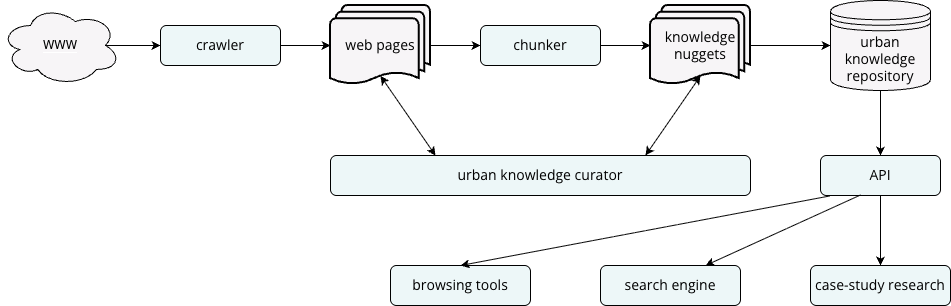
The engine collects content from the Web (local authority websites, news sites, urbanism blogs, research reports, etc.) and runs it through an information curation pipeline to extract nuggets of knowledge about urban policy, infrastructure implementations, the impact of urban interventions and statistical characteristics of places.
The resulting information is stored in our urban knowledge repository and used to power an urban knowledge search engine and browsing tools that we use for writing our series of urban data, impact and milieu stories.
Web crawler
The urbanixm web crawler traverses the World Wide Web in search of content that is relevant to urbanism. We collect various types of web-pages, including local authority websites, news sites, urbanism blogs, scientific articles, project reports and press releases.
Urban knowledge curator
The urbanixm knowledge curator is an artificial intelligence powered toolbox for content annotation. It includes content classifiers for determining whether a web-page is related to urbanism in general, whether it is a good quotable source, and whether it discusses a particular urbanism topic or is referring to a particular place.
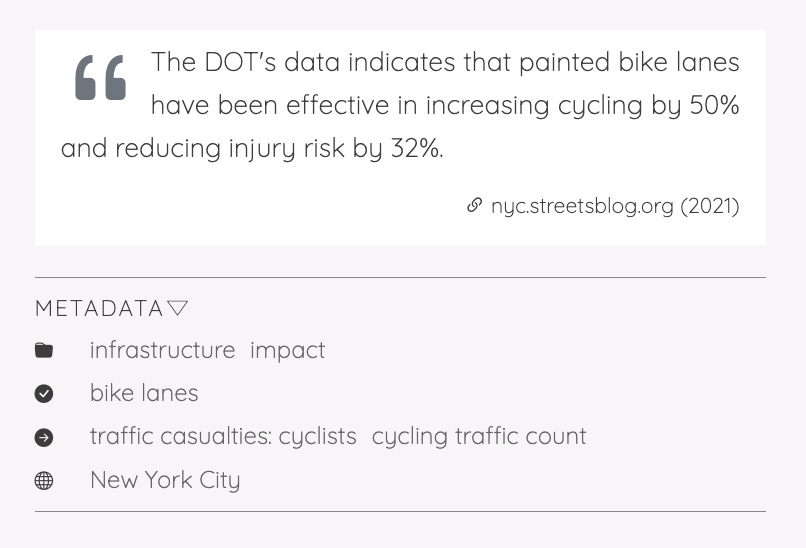
Our classifiers also work at the level of smaller text chunks, or knowledge nuggets. We use them to add various metadata to the chunks, such as the urbanism topics discussed, the places referenced, as well as the narration type, e.g. whether the sentence discusses infrastructure implementation, policy, impact or statistical characteristics of a place.
Urban knowledge repository
The annotated knowledge nuggets generated by the urbanixm content curation pipeline are stored in an urban knowledge repository with searchable access through an API.
Applications
Several user interfaces for searching and browsing have been built on top of the knowledge repository and it is used to power our urban data, impact and milieu stories.